
Full body checkup frequency isn’t one-size-fits-all. “Once a year” is the answer most people expect, but it’s not quite right for everyone. Your ideal frequency depends on your age, your risk factors, and whether anything’s changed since your last visit. Here’s a more useful, age-by-age answer, plus what a full body checkup should actually include.
Full Body Checkup Frequency By Age and Risk

Full Body Checkup Frequency by Age
There isn’t one universal rule for how often you should have a health checkup. The right frequency depends on your age, health, family history and individual risk factors.
In India, the government’s population-based screening programme under the National Programme for Prevention and Control of Non-Communicable Diseases (NP-NCD) targets people aged 30 years and above. The programme includes screening for conditions such as hypertension and diabetes, as well as oral, breast and cervical cancers.
If you have a family history of diabetes, heart disease or cancer, or are already managing a health condition, your doctor may recommend checkups more frequently based on your individual risk factors.
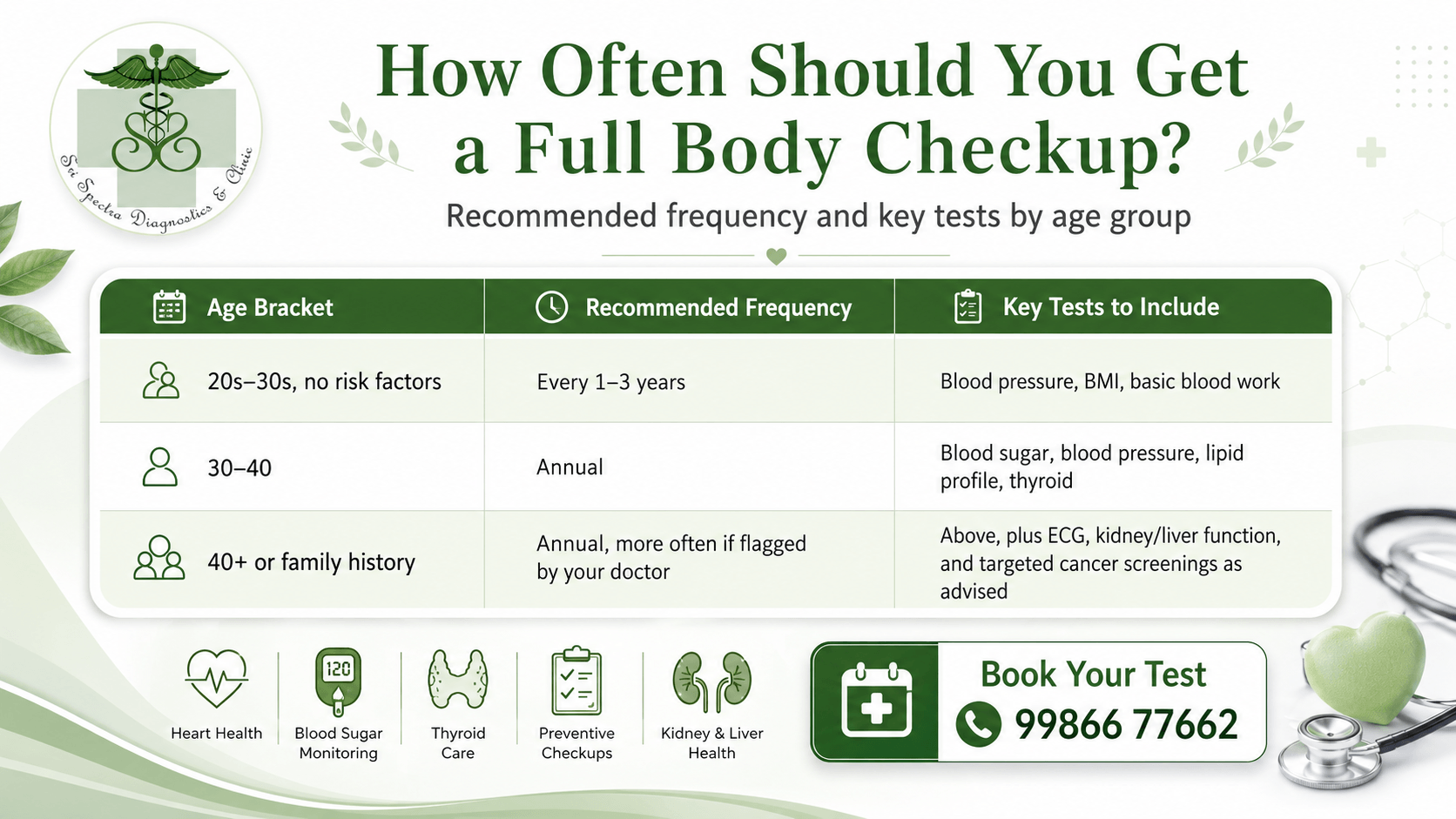
Age Bracket | Recommended Frequency | Key Tests to Include |
20s–30s, no risk factors | Every 1–3 years | Blood pressure, BMI, basic blood work |
30–40 | Annual | Blood sugar, blood pressure, lipid profile, thyroid |
40+ or family history | Annual, more often if flagged by your doctor | Above, plus ECG, kidney/liver function, and targeted cancer screenings as advised |
Signs You Shouldn't Wait for Your Next Scheduled Checkup
Some signals are worth acting on immediately, regardless of when your next checkup is due:
- Unexplained fatigue that lasts several weeks
- A sudden or unexplained change in weight
- A blood pressure reading that surprised you
- A new family history of diabetes, heart disease, or cancer
- Persistent digestive or urinary changes

What's Usually Included in a Full Body Checkup
Packages vary, but most cover the same core set of tests:
- Blood work — blood sugar, lipid profile, thyroid panel, complete blood count (see is home blood collection accurate if you’d rather skip the trip for this part)
- Blood pressure and BMI measurement
- Urine analysis
- ECG
- Sometimes an abdominal ultrasound, depending on the package
Regular screening matters because conditions like diabetes and thyroid disorders often develop silently, with no symptoms in their early stages — which is exactly when they’re easiest to manage. The CDC notes that regular checkups can reduce disease and premature death from chronic conditions like cardiovascular disease and diabetes, which is the whole point of catching things early rather than waiting for symptoms.

What Happens If You Keep Postponing Checkups
Skipping checkups doesn’t usually cause an immediate problem — that’s exactly what makes it easy to keep putting off. Conditions like high blood pressure, high blood sugar, and thyroid imbalance can develop gradually over years without any noticeable symptoms.
By the time symptoms do appear, the condition has often been present for a while, which can make it harder and more expensive to manage than if it had been caught during a routine screening. This is the whole logic behind screening before symptoms show up, rather than waiting for your body to send a clear signal.
Making It a Habit, Not a One-Off
A checkup is only as useful as the pattern it’s part of. A single full body checkup gives you a snapshot of where you stand today; repeating it at the right interval is what actually lets your doctor spot a trend.
A blood sugar level that’s crept up over two years, or blood pressure that’s been quietly rising, only becomes visible when there’s something to compare against. If you’re not sure how often makes sense for you specifically, that’s a reasonable question to bring to your doctor at your very next visit, rather than guessing.
FAQ
For most healthy adults over 30, once a year is a reasonable baseline. Adults in their 20s with no risk factors may be fine with every 1 to 3 years.
India’s national screening programme targets adults from age 30 onward, though earlier checkups make sense if you have a family history of diabetes, heart disease, or cancer.
It depends on the package. Basic checkups usually cover blood work, blood pressure, and BMI; some packages add an ECG or abdominal ultrasound.
Usually yes, since most packages include a fasting blood sugar or lipid test. Confirm the exact fasting window when you book.
Prices typically range from ₹500 to ₹4,000 or more, depending on how many tests are included.
A full body checkup isn’t a one-size-fits-all annual ritual — it should match your age and risk factors. Sri Spectra Diagnostics and Clinic is a diagnostic centre in Akshaya Nagar that can help you figure out where you fall.
If you’re not sure which package fits, book your appointment and we’ll help you pick the right one, or browse our full range of diagnostic tests first.
Pingback: Abdomen Ultrasound Preparation: Price & What It Shows