
An X-ray for fractures is usually the first test a doctor orders after a fall, twist or hard knock. It’s fast, widely available and good at showing most broken bones. But it isn’t perfect, and some fractures hide on the first picture.
This guide explains what an X-ray can and can’t tell you, what to expect during the test and when you may need another scan.
How an X-Ray for Fractures Works

An X-ray passes a tiny dose of radiation through your body. Dense tissue like bone blocks most of it, so bones show up white on the image. A break appears as a dark line or a step in the bone.
Mayo Clinic describes the X-ray as a quick imaging test that helps find the cause of pain and injury. The scan itself takes only a few minutes, and you don’t need any special preparation.
What an X-Ray Can Show
For most injuries, an X-ray gives a clear answer. It can show:
- Whether a bone is broken, and where
- Whether the broken ends have moved out of place
- Whether a joint is dislocated
- Signs of arthritis or older healed breaks
It’s also useful after a fracture heals. A repeat picture shows whether the bone is knitting together properly.
When an X-Ray for Fractures Isn't Enough
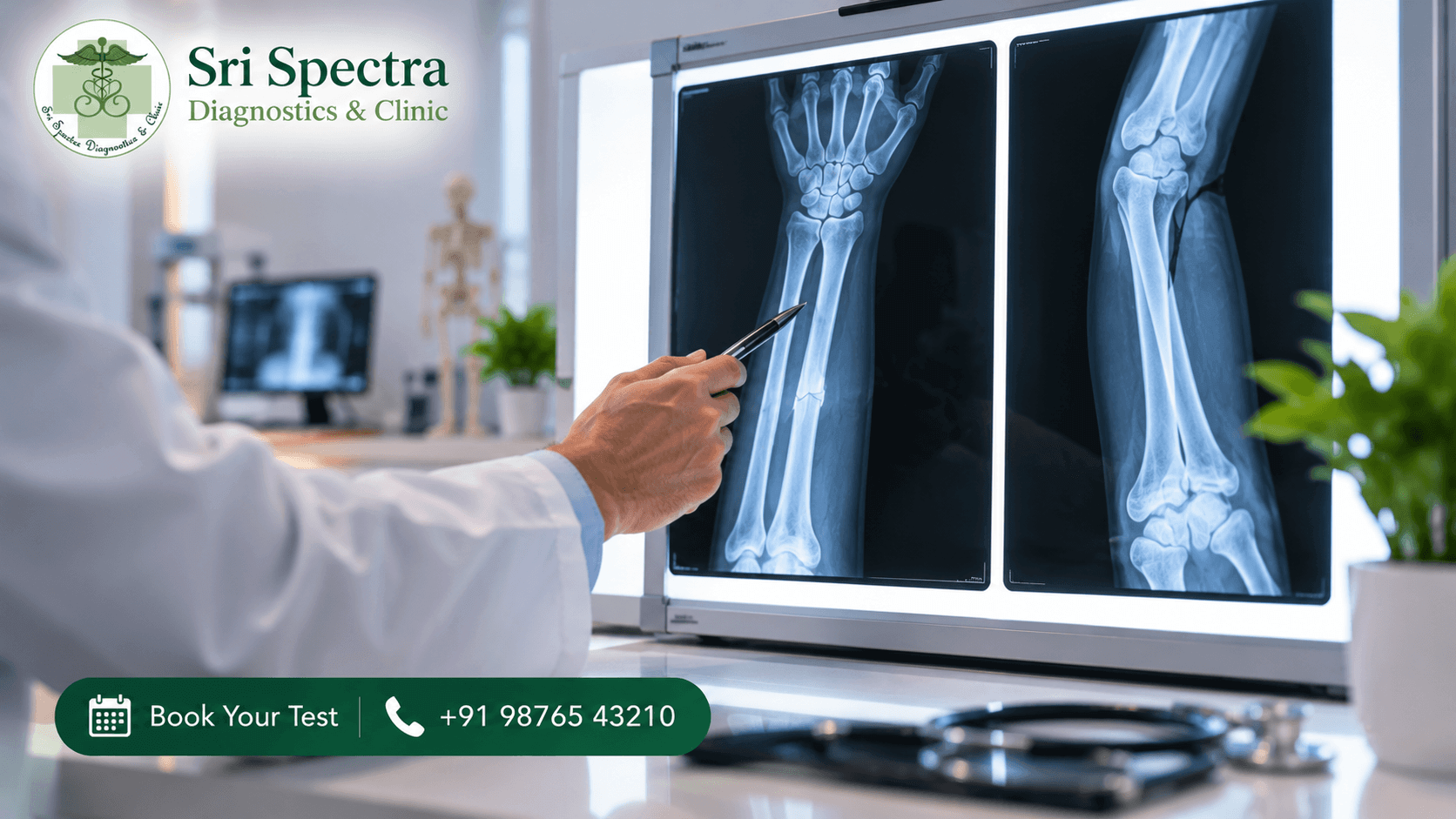
Some injuries don’t show up right away. Mayo Clinic notes that stress fractures may not appear on an X-ray at first, and an MRI or another scan may be needed.
Tiny hairline cracks can also be hard to see. If you’re still in pain a week or two later, a repeat X-ray can show a healing line that wasn’t visible earlier.
What an X-Ray Misses
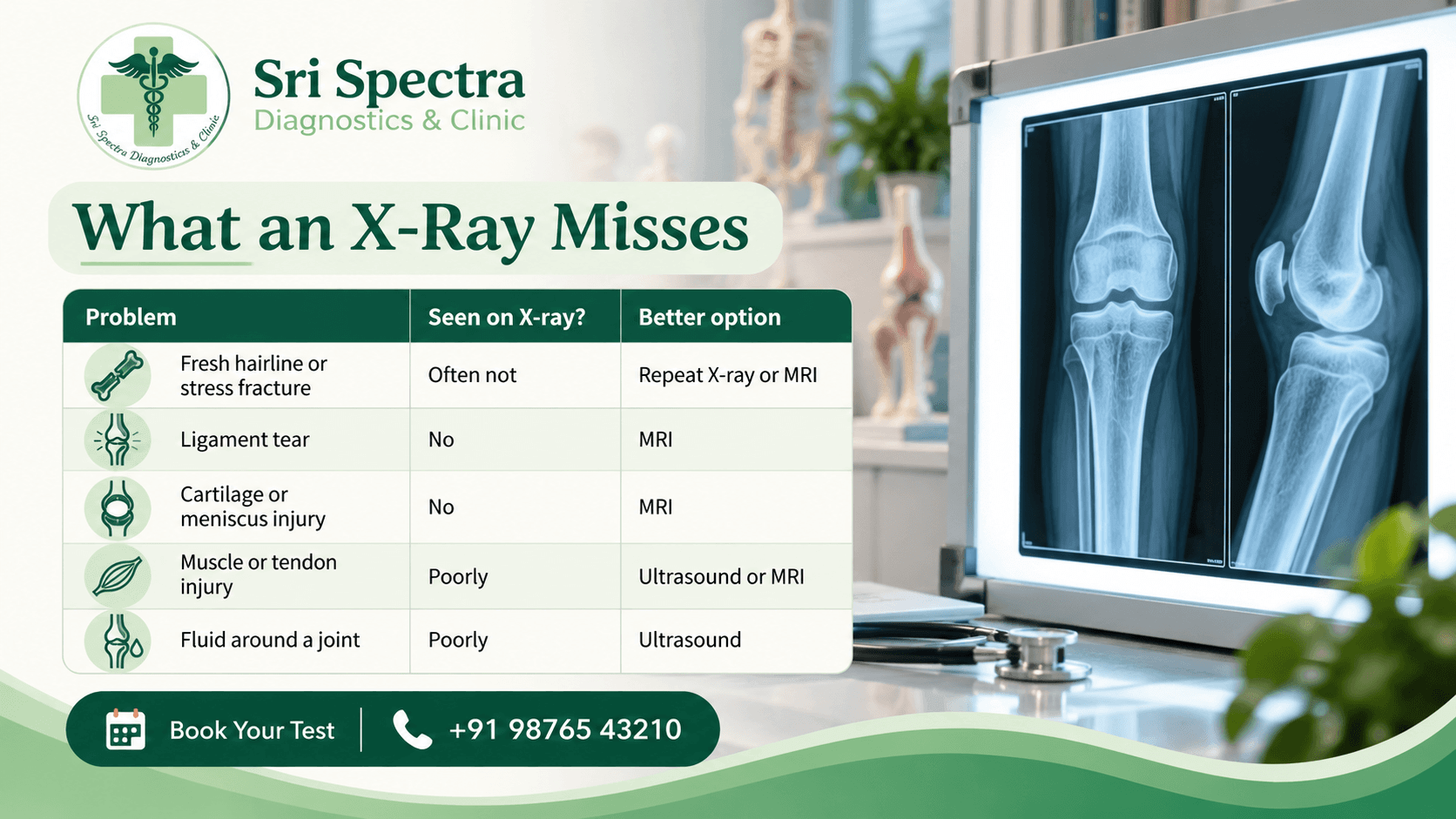
X-rays are made for bones. They are much weaker at showing soft tissue, so they can miss:
Problem | Seen on X-ray? | Better option |
Fresh hairline or stress fracture | Often not | Repeat X-ray or MRI |
Ligament tear | No | MRI |
Cartilage or meniscus injury | No | MRI |
Muscle or tendon injury | Poorly | Ultrasound or MRI |
Fluid around a joint | Poorly | Ultrasound |
MRI is a separate scan, arranged on a doctor’s advice. It isn’t a replacement for the first X-ray, but it fills the gaps when pain doesn’t match the picture.
When to Get an X-Ray
Get checked quickly if you have:
- Severe pain after a fall or accident
- Swelling or bruising that appears fast
- A limb that looks bent or out of shape
- Trouble putting weight on a leg or using an arm
- Numbness or tingling below the injury
If it’s a knee problem, our guide to knee pain and when to see a doctor explains which signs need a scan.
What to Expect at the X-Ray
The visit is simple. You may be asked to remove jewellery or metal, and you’ll be placed so the injured area can be pictured from a couple of angles.
Stay still for a few seconds while each image is taken. You’ll feel nothing. For related guidance on cost and who needs one, see our chest X-ray price guide.
Is the Radiation Safe?
The dose from a single limb X-ray is very small. Tell the staff if you could be pregnant, as they’ll take extra care. If you’re unsure, ask before the scan.
X-rays are used when the benefit clearly outweighs the small risk, so a doctor’s request matters. Avoid repeating scans just for reassurance, and keep your old films handy so nobody repeats one unnecessarily.
A Quick Checklist Before You Go

Keep these ready:
- The doctor’s request or your symptoms
- Any earlier X-rays of the same area
- A note of how the injury happened
- Loose clothing without metal zips or buttons
Common Mistakes
People often lose time by:
- Assuming a normal X-ray means no injury
- Walking on a painful limb to see if it improves
- Skipping a follow-up scan when pain continues
- Removing a splint without advice
FAQ
Yes. Hairline and stress fractures can be invisible at first. A repeat X-ray or an MRI may be needed if pain continues.
The picture takes seconds. The whole visit, including positioning, usually takes 10 to 15 minutes.
Usually not. Wear loose clothing and remove metal items from the area being scanned.
A single limb X-ray uses a very small dose of radiation. Tell the staff if you could be pregnant.
An MRI is used when a ligament, cartilage or stress fracture is suspected and the X-ray looks normal. Your doctor will advise.
An X-ray for fractures is quick, simple and the right first test for most injuries. It can miss hairline cracks and soft tissue damage, so keep following up if the pain doesn’t match a “normal” result.
If you’ve hurt a bone or joint, book your appointment at Sri Spectra. You can also meet our orthopedic doctor in Akshaya Nagar or see our full range of diagnostic tests.