
A palpitations ECG test is usually the first thing a doctor orders when your heart suddenly races, flutters or skips a beat. Most palpitations turn out to be harmless. Still, the feeling is scary, and a quick heart tracing can tell you whether it needs more attention.
This guide explains what causes palpitations, when to get checked, what an ECG can find and which signs mean you shouldn’t wait.
What Are Palpitations?
Palpitations are the feeling that your heart is pounding, fluttering or missing beats. You may notice them in your chest, throat or neck.
Mayo Clinic explains that palpitations are often triggered by stress, caffeine, exercise or hormonal changes. Sometimes, though, they point to an irregular heart rhythm or another heart condition.
Common Triggers
Everyday triggers are far more common than heart disease. They include:
- Stress, anxiety or lack of sleep
- Too much coffee, tea or energy drinks
- Smoking and alcohol
- Fever, dehydration or anaemia
- Some cold and asthma medicines
- Hormonal changes, including pregnancy and periods
If you spot a pattern, such as palpitations after strong coffee, cutting back can help. Keeping a short symptom diary for a week can reveal patterns you’d otherwise miss, and it gives your doctor something concrete to work with.
When a Palpitations ECG Test Makes Sense
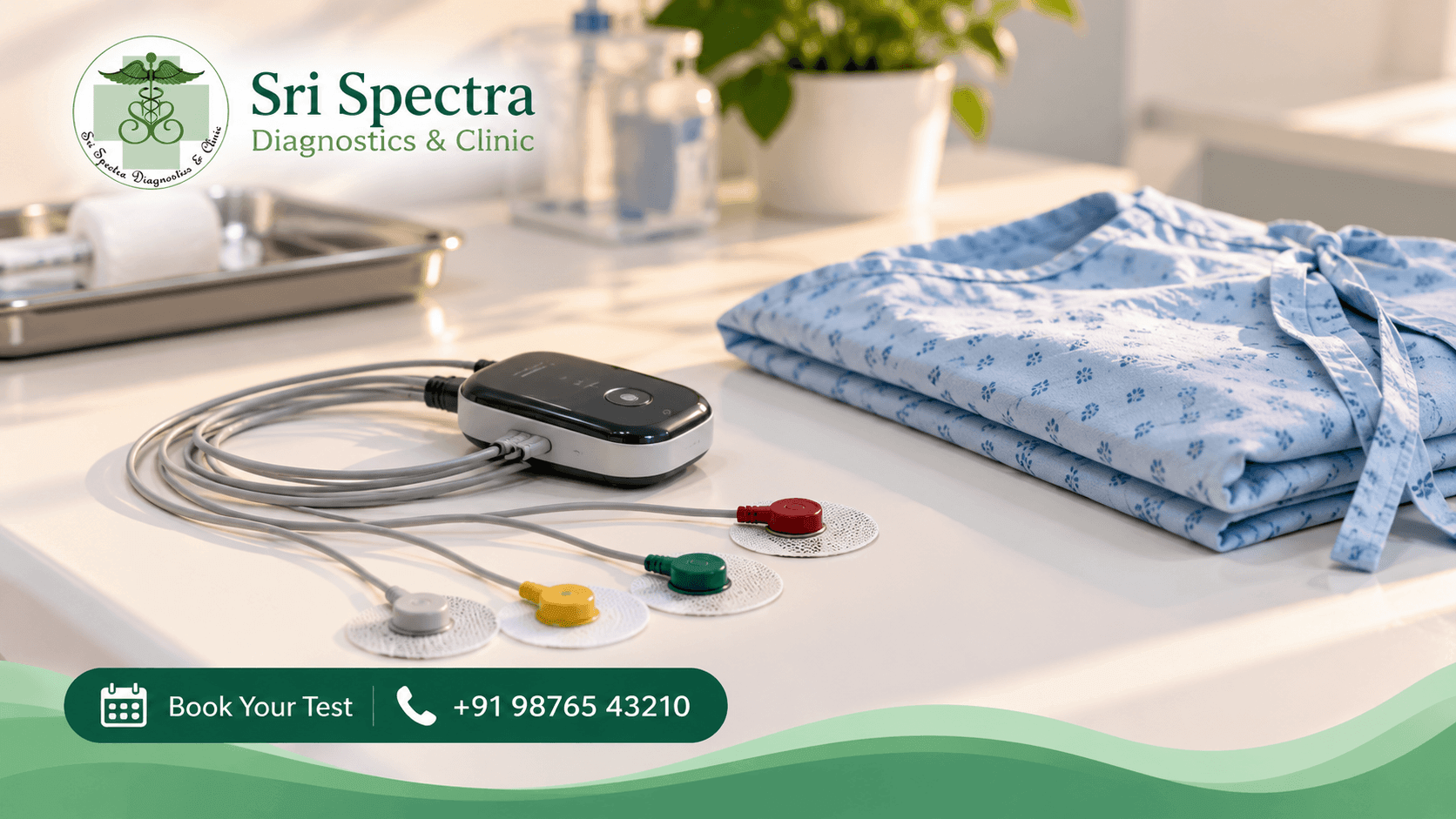
Book an ECG if your palpitations:
- Happen more than once or last several minutes
- Come with dizziness or light-headedness
- Appear during exercise or at rest for no clear reason
- Occur if you have heart disease, high blood pressure or diabetes
- Run in a family with sudden heart problems
If you’re unsure, a general physician can help you decide. You can meet our general physician to talk through your symptoms first.
What a Palpitations ECG Test Records
An ECG records your heart’s electrical activity through small sticky patches on your chest, arms and legs. It’s painless and takes only a few minutes. Mayo Clinic describes the ECG as a quick test that can detect an irregular rhythm.
Our guide to the ECG test cost and how it’s done walks through the process step by step.
The Catch: Palpitations Come and Go
A standard ECG only captures a few seconds. If your heart behaves normally during the test, the result can look normal even when you do have palpitations.
That’s why doctors sometimes suggest a longer recording. If you can, try to get the tracing done while symptoms are happening, or soon after, because that’s when the rhythm is most likely to show a change.
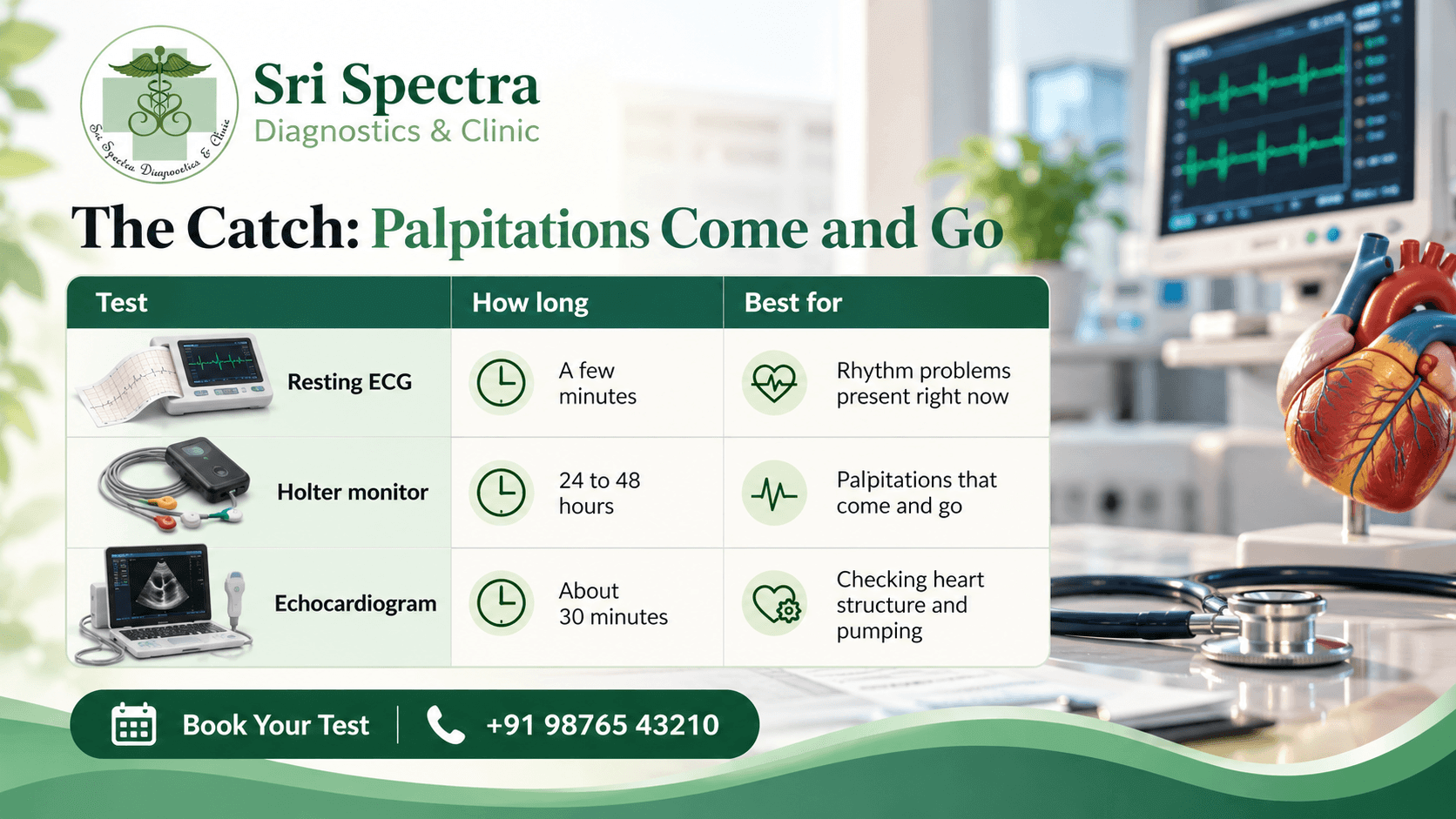
Test | How long | Best for |
Resting ECG | A few minutes | Rhythm problems present right now |
Holter monitor | 24 to 48 hours | Palpitations that come and go |
Echocardiogram | About 30 minutes | Checking heart structure and pumping |
A Holter monitor records your heart for a day or more as you go about normal life. Ask whether it is available before you plan, as it may need a referral.
An echocardiogram looks at the heart’s structure. Read our guide on the echo test near Akshaya Nagar for what it shows.
Warning Signs: Don't Wait for an Appointment
Go to an emergency department or call for help if palpitations come with:
- Chest pain or pressure
- Severe shortness of breath
- Fainting or near-fainting
- Sudden confusion or weakness
- A very fast heartbeat that doesn’t settle
Don’t drive yourself if you feel faint.
A Quick Checklist Before Your ECG
Make the visit count by noting:
- When palpitations happen and how long they last
- What you were doing just before
- Your caffeine, alcohol and smoking habits
- Your medicines and any supplements
- Past heart tests or reports
Wear a loose, two-piece outfit so the patches can be placed easily. Bring a family member if you feel shaky, and tell the technician if you’ve had palpitations that day.
Common Mistakes
Avoid these errors:
- Ignoring palpitations that keep returning
- Assuming a normal ECG rules out every problem
- Self-medicating with heart or anxiety tablets
- Skipping a follow-up recording when advised
- Delaying care when chest pain is present
FAQ
Usually not. Most are triggered by stress, caffeine or illness. See a doctor if they’re frequent or come with dizziness or chest pain.
No. A standard ECG records a few seconds, so it can miss episodes that come and go. A Holter monitor may be needed.
No. You can eat and take your usual medicines unless your doctor says otherwise.
Chest pain, severe breathlessness or fainting with palpitations needs urgent care.
Yes, it’s a common cause. A normal ECG and a doctor’s check can help rule out a heart problem.
Most palpitations are harmless, but repeated episodes, dizziness or chest discomfort deserve a proper check. A palpitations ECG test is quick and simple, and it’s the right starting point for working out what’s going on.
To get checked, book your appointment at Sri Spectra, or see our full range of diagnostic tests.