
ECG test cost in Bangalore is usually the easy part to find out — it’s the procedure itself that makes people nervous, picturing wires, machines, and something uncomfortable. In reality, it’s one of the simplest tests in medicine — painless, quick, and genuinely useful. Here’s exactly how it’s done, what it can and can’t detect, and what it typically costs.
How an ECG Is Done
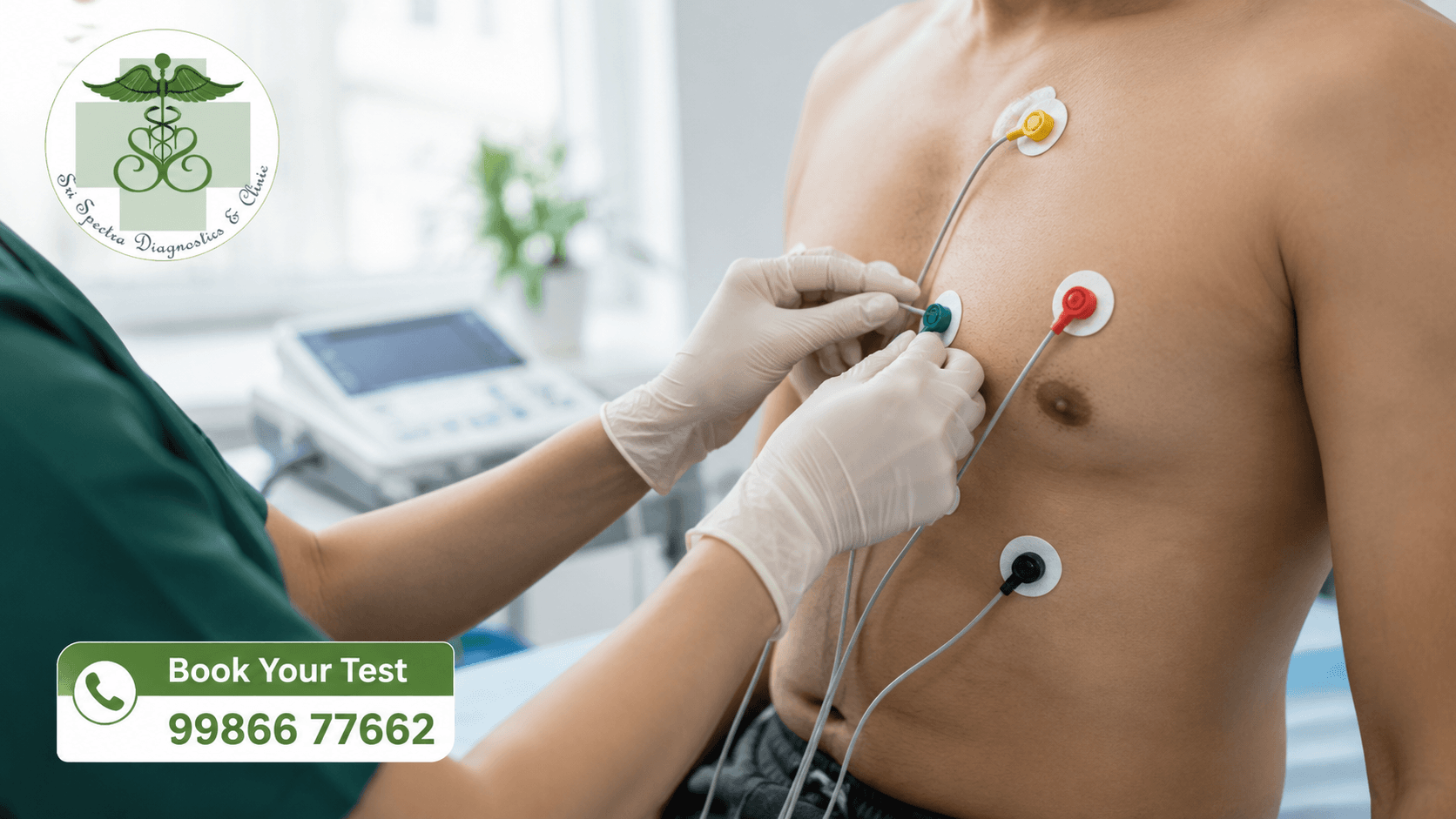
ECG Test Cost in Bangalore and What the Procedure Involves
An electrocardiogram (ECG or EKG) measures the electrical activity of your heartbeat. Small sticker electrodes are placed on your chest and sometimes your arms and legs, connected to a machine that records the electrical wave as it travels through your heart with each beat.
There’s genuinely nothing to worry about here. The American Heart Association is clear that there’s no pain or risk involved — the machine only records your heart’s electrical activity, it doesn’t send any electricity into your body. The whole test usually takes just a few minutes, and any discomfort is limited to the electrode stickers being removed afterward.
What Can an ECG Detect?
An ECG gives your doctor a snapshot of your heart’s rhythm and electrical timing. It can help identify:
- Irregular heart rhythms, known as arrhythmias
- Evidence of a previous heart attack
- Signs that may point to coronary artery disease
- How well a pacemaker is functioning
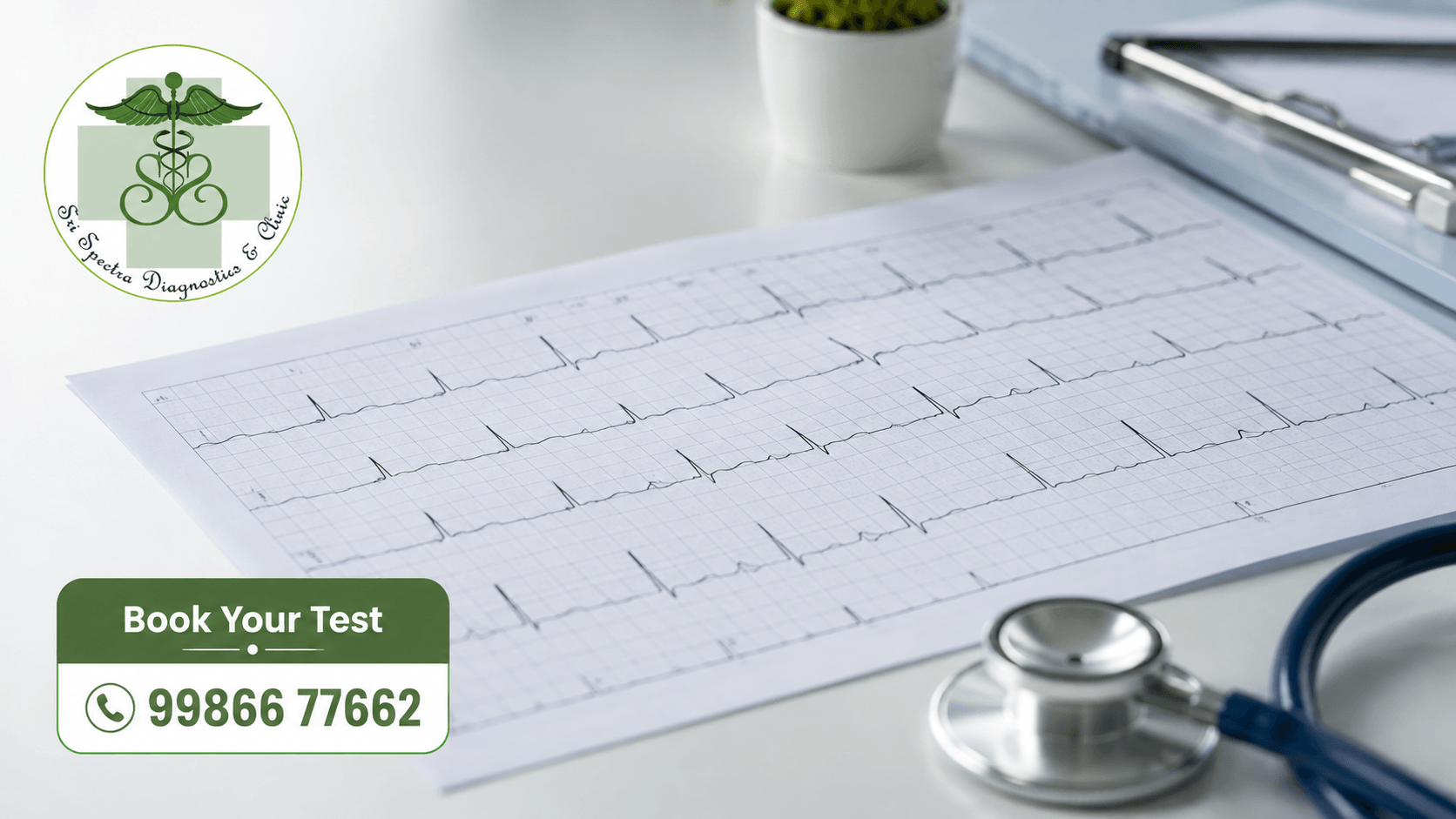
Worth knowing: the American Heart Association doesn’t recommend ECGs as a routine screening test for adults at low risk who have no symptoms. If you have a family history of heart disease, though, your doctor may still suggest one as an early check even without symptoms.
Heart disease remains worth taking seriously either way — cardiovascular disease is the leading cause of death worldwide, according to the WHO), which is exactly why a quick, low-cost test like an ECG is so widely used whenever there’s genuine reason for one.
Symptoms That Might Prompt an ECG
Your doctor is more likely to recommend an ECG if you’re experiencing:
- Chest pain, pressure, or tightness
- Heart palpitations or a sense of your heart racing or skipping beats
- Unexplained dizziness or fainting
- Shortness of breath that seems out of proportion to activity
- A pre-surgery workup, where a baseline ECG is standard practice
Types of ECG: Resting, Holter, and Stress
The test described in this article is a resting ECG — the standard, few-minutes version done while you lie still. It’s useful, but it only captures what your heart is doing at that exact moment.
If your doctor suspects an irregular rhythm that comes and goes, they may order a Holter monitor instead — a small portable device you wear for 24 to 48 hours that records continuously. For symptoms linked to physical activity, a stress test records your ECG while you exercise on a treadmill, showing how your heart responds under exertion.
Each version answers a slightly different question, which is why your doctor picks based on your specific symptoms rather than running every test by default.
ECG vs Echocardiogram vs Stress Test
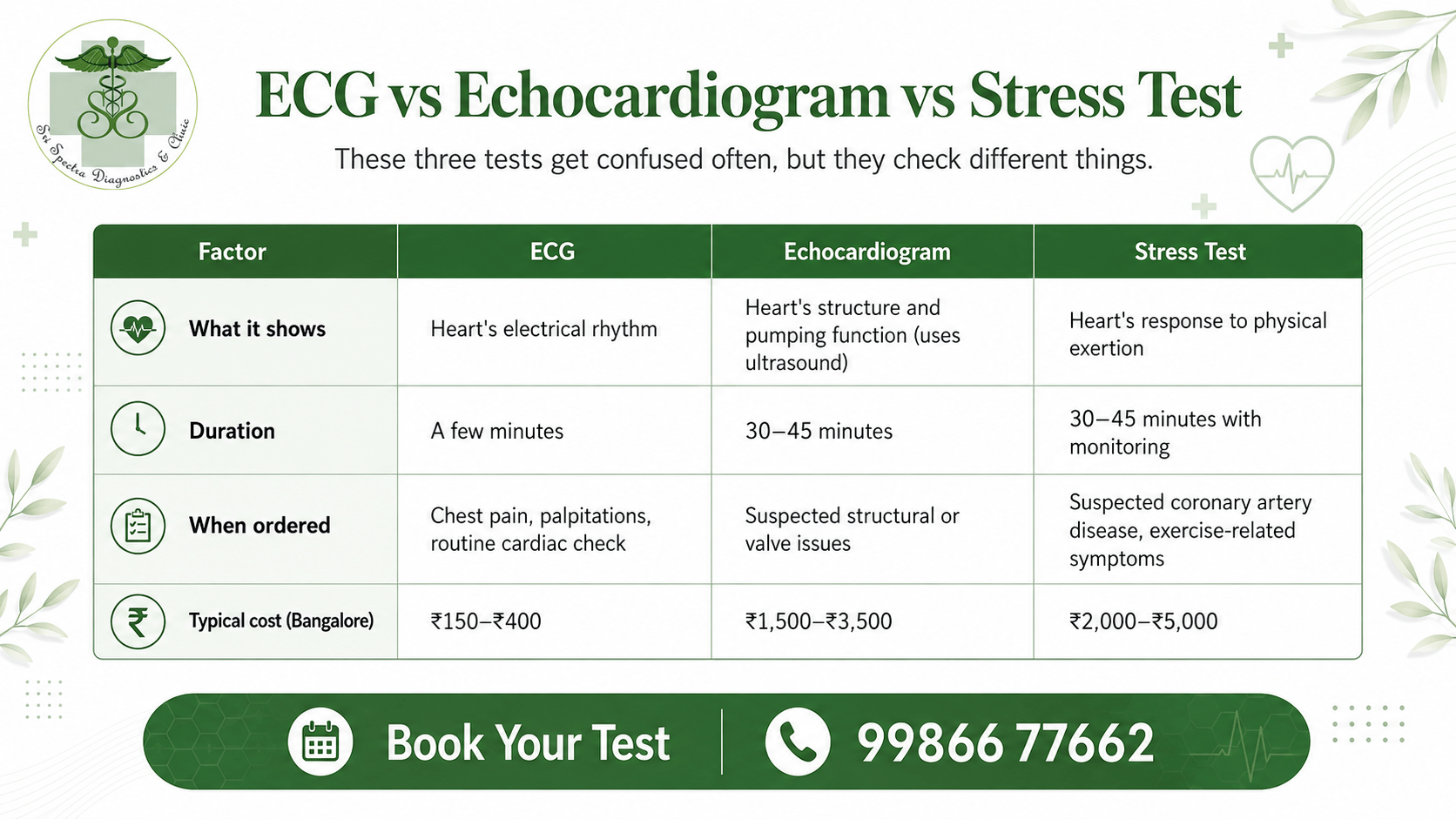
These three tests get confused often, but they check different things.
Factor | ECG | Echocardiogram | Stress Test |
What it shows | Heart’s electrical rhythm | Heart’s structure and pumping function (uses ultrasound) | Heart’s response to physical exertion |
Duration | A few minutes | 30–45 minutes | 30–45 minutes with monitoring |
When ordered | Chest pain, palpitations, routine cardiac check | Suspected structural or valve issues | Suspected coronary artery disease, exercise-related symptoms |
Typical cost (Bangalore) | ₹150–₹400 | ₹1,500–₹3,500 | ₹2,000–₹5,000 |
Before Your ECG
A few simple steps make the test quicker and the reading more accurate:
- Avoid caffeine and heavy exercise right before the test — both can temporarily raise your heart rate
- Wear a top that’s easy to remove or gives easy access to your chest
- Mention any medications you’re taking, especially heart medications
- No fasting is required
- Results are often available the same day, or discussed with your doctor right after

An ECG is often ordered alongside other routine tests. If it’s part of a wider workup, it’s worth checking how often you should get a full body checkup, and if blood work is also on the list, is home blood collection accurate enough to skip an extra trip — for most routine panels, yes.
FAQ
No. It’s completely painless — electrodes are simply placed on your skin, and the machine only records your heart’s electrical activity without sending anything into your body.
The test itself usually takes just a few minutes, though electrode placement adds a little extra time.
It can show irregular heart rhythms, signs of a past heart attack, indicators of coronary artery disease, and how well a pacemaker is functioning.
No fasting is required. Just avoid caffeine and vigorous exercise right before the test.
Typically between ₹150 and ₹400, depending on the centre.
An ECG is quick, painless, and gives your doctor a real snapshot of your heart’s electrical activity. Sri Spectra Diagnostics and Clinic is a diagnostic centre in Akshaya Nagar that offers this alongside other routine tests in one visit.
If your doctor has recommended one — or you’d simply like a baseline reading — book your appointment, or browse our full range of diagnostic tests to see what else you might need. No fasting or special preparation needed.